Profile: Spontea Drinks, Lliça D’Amunt, Spain
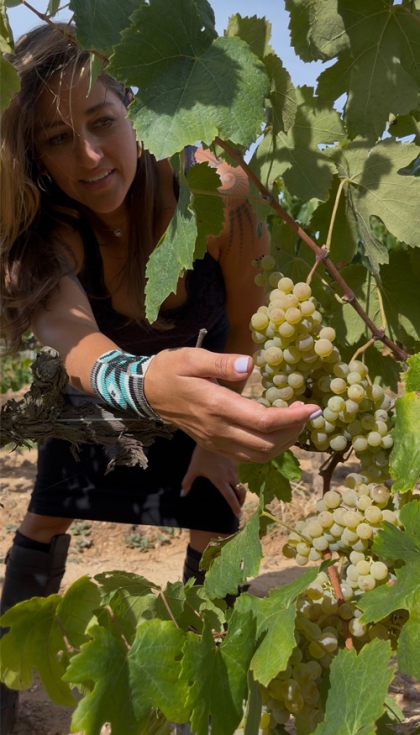
KBI’s Executive Director, Kendra Sepúlveda, is featured in a recent interview with Spanish B2B marketplace @Interempresas discussing the nearly 10-year journey behind @sponteadrinks —a premium fermented beverage that combines the science of wine and kombucha fermentation to create an entirely new category. From balancing two living fermentation systems to exploring new opportunities for fermentation in the NoLo space, the conversation with Kendra offers thoughtful insights into innovation, terroir, and the future of fermented beverages.
Spontea does not identify as a dealcoholized wine, nor a standard kombucha. Its philosophy is built on the belief that the sophisticated palate should never have to settle for a diminished version of a classic. Instead of stripping alcohol away from a finished wine—a process that often leaves the soul of the grape behind—Sepúlveda builds her beverage from the ground up, blending tea fermentation with traditionally vinified grapes.
I think many alcohol-free beverages have tried to recreate the exact experience of wine or cocktails. But for me, the most exciting goal was to create something original—something that could sit alongside wine at the table rather than compete with it. No one item of clothing replaces an evening gown, a tailored suit, a leather jacket, high heels, or sandals. Each serves a different purpose.
A dialogue between two living systems
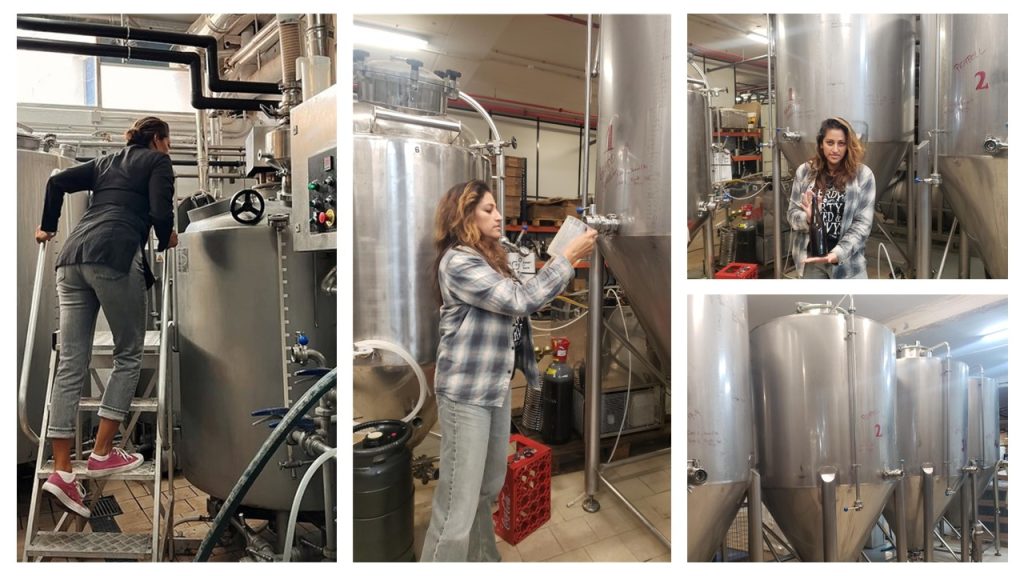
To create this original beverage, Sepulveda mastered the delicate art of balancing two fermentation systems that rarely speak the same language. Wine is a finished product of alcoholic fermentation with a rigid, defined structure; kombucha is a dynamic, living system that is constantly in flux.
When you introduce one into the other, you must thoroughly understand how the acids, polyphenols, residual sugars, and aromatic compounds interact and change over time. Another major challenge has been controlling the fermentation without sacrificing expression. It is very easy for the result to become overly aggressive or unstable if it is not managed with precision. My work has focused on finding a point of balance where the fermentation remains alive while also being elegant, clean, and consistent.
The sommelier’s stamp of approval
While Spontea began as a personal exploration into food pairings, it was the validation of the culinary elite that moved it from the laboratory to the dining room. Sommelier Amador Marín López was the primary catalyst, recognizing that Sepulveda’s “controlled transformations” filled a gap in the cellar that traditional wines could not.
Amador Marín played a key role during the early stages of the project. He believed in the concept from the beginning, encouraged me to continue developing it, and helped identify wineries and grape varieties that could harmonize with the world of fermentation. In fact, he is probably one of the main reasons I ultimately decided to turn Spontea into a commercial reality.
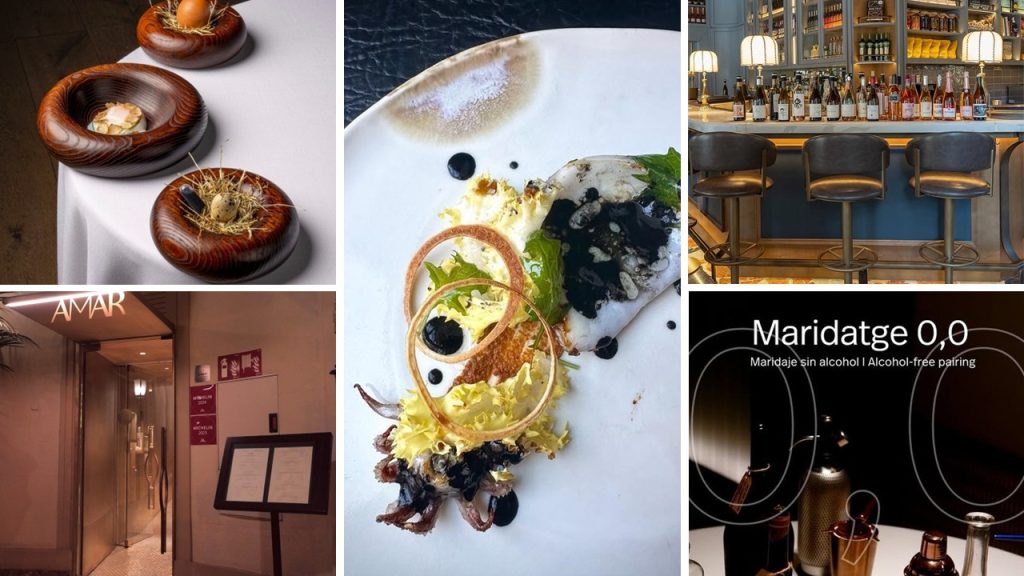
Today, this hybrid is no longer a secret of the test kitchen. It is found on the most prestigious beverage venues in Spain, standing shoulder-to-shoulder with legendary vintages at:
- ABaC: Jordi Cruz’s three-Michelin-star temple of innovation.
- Alkimia: Jordi Vilà’s masterclass in contemporary Catalan cuisine.
- Cinc Sentits: Jordi Artal’s refined, two-Michelin-star vision of local terroir.
- Amar Barcelona: Rafa Zafra’s celebrated seafood destination at the Hotel Palace.
- Can Bo: A venue renowned for its commitment to Mediterranean ingredients and ritual.
Terroir reimagined
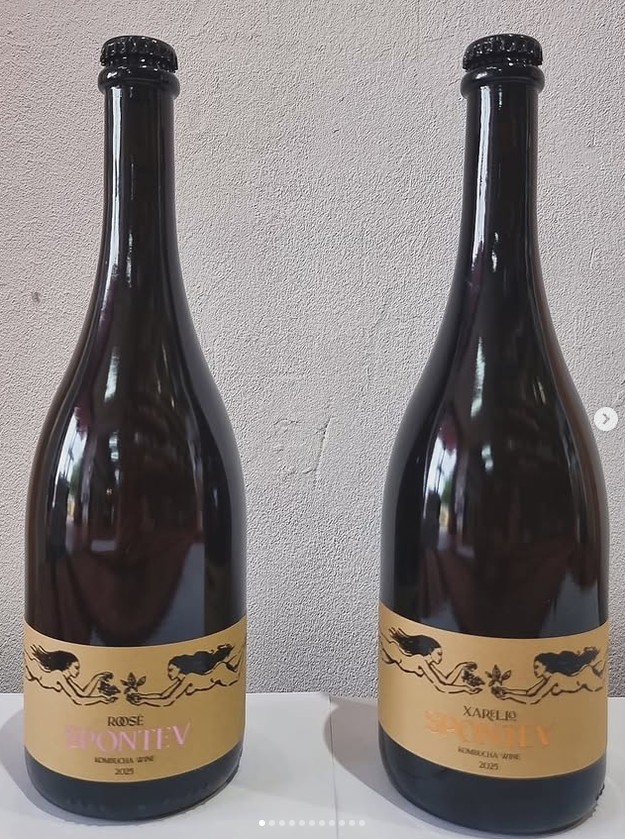
Spontea is deeply rooted in the soil of the Penedès region of Catalonia. It uses the land’s history not as a museum piece, but as a medium for evolution. The current collection features a single-varietal Xarel·lo, a distinct, high-quality white wine known for its high acidity, robust structure, and exceptional aging potential. There is also a Rosé blend crafted from a selection of Garnacha, Trepat, and Sumoll grapes.
I am fascinated by the stories the land can tell through a grape variety when it is treated with care, respect, and diligence. The beauty of terroir, the emotion embedded in agriculture, and the devotion required to create something meaningful and artistic deserve to be preserved while being directed toward new purposes in modern ways. Spontea is my personal expression of that balance and philosophy, conveyed through the art of fermentation
This use of high-quality grapes is a strategic move for the future of the Mediterranean table. As climate change drives sugar and alcohol levels higher in traditional winemaking, Spontea offers a way to utilize the harvest that respects the grower’s labor and the vineyard’s economy. By reinterpreting terroir through a different lens of fermentation, Sepulveda ensures the vineyards remain sustainable and relevant even as global drinking habits shift.
Climate change is directly affecting grape ripening and sugar levels, while at the same time consumers are clearly moving toward more mindful alcohol consumption. My intention has been to connect these two realities: to harness the enormous potential of grape must and transform it through fermentation into something entirely new and wonderful to enjoy
A decade in development
Sepulveda has devoted a decade to mastering the art of fermentation to create this beverage. She let taste guide the process. And, as in wine culture, her understanding of fermentation revolved around balance, texture, emotion, and the experience at the table. Spontea was “never designed as a market-driven product, the expression of an ideology, or the solution to a commercial problem, rather it was “born on the palate.”.
I have spent a long time dreaming of this moment and working tirelessly to find the right framework that could integrate the worlds of wine and kombucha—not by forcing them together, but by allowing them to speak naturally through the product while remaining faithful to science and discovery. As you can imagine, this has not been the easiest path. There are certainly shortcuts and techniques that many people would consider logical, practical, and efficient for creating a beverage, but that is not how I approach the process. I believe this new creation deserves hard work, constant precision, and deliberate adjustments guided by sensory evaluation.
The future of fermentation
Spontea represents a pivot point in the beverage landscape. It suggests that the knowledge of the wine world and the specialized expertise of alternative fermentation do not have to exist in isolation. Instead, they can merge to create a new category that honors the past while embracing a more conscious, adventurous future.
I believe the wine industry has an enormous opportunity to evolve and broaden the way we think about fermented beverages. Younger generations are seeking complex gastronomic experiences while reducing their alcohol consumption. I do not see this as a rejection of the social and cultural experience of wine. Rather, I see it as a redefinition of that relationship through more conscious consumption. Wine may occupy a smaller place in that new world—but why should the grapes suffer? Why should the vineyards suffer? Let’s discover what else grapes can do.
There is also a significant opportunity from the standpoint of sustainability and climate adaptation. High-quality grape must can be used to develop entirely new categories, such as Spontea, which in turn helps protect grape growers and the wine-growing economy.
Viewed from the cultural perspective, we see a changing market. Viewed from the environmental perspective, we see a changing climate. Put those two realities together, and we have both a market opportunity and a business opportunity—provided we can create a beverage that is genuinely exceptional. That is what I have spent the past ten years building and refining. There are no shortcuts. There is no substitute for taste as the guide to excellence. For me, terroir remains the ultimate expression of the land and its climate.
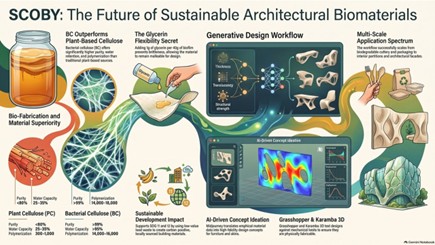
This Profile was created with the help of ChatGPT’s translation of Food Industry Journalist, Nina Jareño’s interview with Kendra published July 20, 2026 by Interempresas Media. Graphics via NotebookLM. My ChatGPT English translation of the complete interview is available for download.