Profile: Selvatica Lab, Piedimonte Etneo, Italy
This is a follow-up about one of the companies on the list of 20 Premium Kombucha brands published on August 11, 2026. We invited anyone on that list to contact us with more details. I interviewed co-founders Leonor and Marco of Selvatica Lab (via a written Q&A exchange) focusing on their artisanal, premium kombucha.
Selvatica Lab is a creative fermentation laboratory—born of research, observation, and passion—that blends scientific knowledge with the alchemical art of fermentation to create a unique, inimitable sensory experience. The Lab is a living web of presences—much like a SCOBY—that facilitates fermentative symbioses among wandering souls. It serves as a porous threshold where diverse collaborators choose to walk together, cultivating relationships rooted in mutual respect and deep listening. It is a suspended moment in time, where every encounter becomes a seed, and every exchange a new possibility. Selvatica Lab is Marco and Leonor’s dream; it expands and takes shape through its encounters with Bagol’Area–a 24 hectare permaculture-inspired farm overlooking the Ionian coast and celebrated as a center of biodiversity with a vegetable garden, citrus grove, orchards, vineyards and woods. The Lab draws nourishment from its connection to the local landscape that evolves into a collective identity—resonating with all who welcome, transform, and create together.
In each kombucha, we intertwine research, ingredients, and roots to tell our territory through fermentation. We ferment kombucha and P-Etna tea with local raw materials and quality tea, letting our surroundings express themselves freely, following natural rhythms.
Founders
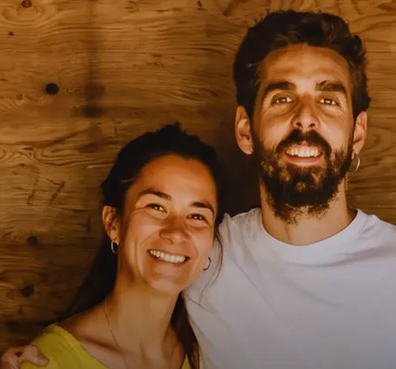
Leonor grew up among her family’s coffee plantations (cafetales) in Costa Rica, where nature and agricultural tradition shaped her life. An agronomist and food technologist, she spent years working in university research departments, building a solid career rooted in science. Her expertise is essential to creating high-quality kombucha, where a scientific approach blends seamlessly with the art of fermentation. As the alchemist of Selvatica Lab, Leonor manages to transform every batch into an explosion of flavor—all while staying strictly committed to rigorous scientific methodology.
Marco, an engineer with an inherently curious nature, possesses a contagious passion for fermentation and foraging. With a keen focus on gastronomy and food science, he explores the micro-world of natural yeasts and spontaneous fermentation. His vision extends beyond pure logic: each experiment is a journey that bridges the natural sciences, social sciences, and the local landscape. For Marco, everything connects—microorganisms, cultures, and flavors. His curiosity and passion drive the innovations at Selvatica Lab.
Origins
Inspired by an encounter with the pioneering French brand, Karma Kombucha, they began producing kombucha at home. They shared their batches with friends and acquaintances. What began as a personal interest gradually took on a more serious shape. As the pandemic ended, the pair began considering whether fermentation could become not just a passion, but a way of life and work. Friends who were wine producers and farmers encouraged them to take the idea further. They weighed two possible homes for the project—Sicily, Marco’s birthplace, and Costa Rica, Leonor’s homeland—and ultimately chose Sicily.
After moving to Sicily, they had to navigate Italian bureaucracy to launch a commercial business. At first, it was hard to find anyone who believed in their project. They realized they needed collaborators willing to support an unfamiliar idea. A turning point came through their relationship with Azienda Bioagricola Bagol’Area. The agricultural business, and the people behind it, helped them give Selvatica Lab a more concrete structure and move from home experimentation toward a functioning enterprise.
The next challenge was introducing kombucha itself. In their local market, the founders found that selling the drink meant explaining what fermented beverages are, how they are made, and why they might fit into a food culture not yet accustomed to them. Education and outreach became as important as production. Many emerging kombucha makers share that experience. A product can be distinctive and carefully made, yet still require producers to help consumers understand what it is—and how it fits into everyday eating and drinking.
Process
Today, Selvatica Lab operates in Presa, a village in the municipality of Piedimonte Etneo, on the northeastern slopes of Mount Etna. For the founders, the location is more than a backdrop. It is part of the product’s identity.
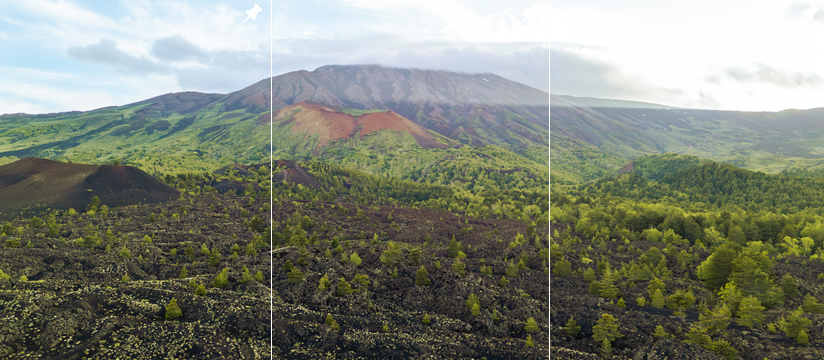
Amid this wild landscape, the home of centuries-old traditions, Selvatica Lab brings together the art of winemaking, the foraging of wild herbs and flowers, and the sourcing of high-quality teas from around the world. Each tea is selected not only for its organoleptic properties but also for how well it reflects their philosophy. Here, respect for the land and the fermentation process are elevated to a true art form. The result is a beverage that defies conventional definition: a perfect balance that possesses neither the arrogance of wine (you know what they are talkin’ about!) nor the pretentiousness of craft beer (ditto!), yet avoids the simple innocence of an ordinary herbal infusion. Every bottle reveals the sensory profile of a living, breathing (dare we say, even volcanically explosive) landscape, enriching the palate with every nuance of the mountains, local culture, and the craft of fermentation.
They’ve developed a close working relationship with their tea producers, with a goal of even harvesting Sicilian teas:
Tea is one of kombucha’s main raw ingredients, and from the beginning we have tried to shorten and simplify the supply chain associated with its production. Through our research, we contacted Satemwa, an organization in Malawi willing to work with us. This collaboration led us to choose Malawi as the main origin of the teas we currently use for our kombuchas. Most of our tea therefore comes from Malawi, while smaller quantities come from Asia and the Azores.
For us, however, this is only the first step. Our future ambition is to complete the kombucha production cycle by growing our own tea. We are therefore experimenting with cultivating Camellia sinensis on Mount Etna, observing how it adapts to local conditions and assessing whether this cultivation could become a practical part of our project. The goal is not simply to produce one more raw ingredient, but to build a supply chain that is increasingly rooted in the local area: starting with tea, moving through fermentation, and turning it all into a beverage that tells the story of the place where it was born. This work is still experimental, but it is one of the directions that excites us most about the Lab’s future..
Local agriculture shapes Selvatica Lab’s ingredients and its approach to product development. Whenever possible, they hand-harvest plants, flowers, and fruit from the area around Mount Etna, following the rhythms of the seasons and respecting the environment in which they grow. They believe that every harvest is an act of listening to and caring for the land. Naturally, they cannot always source everything themselves; so, they partner with farms and herbal producers who share their philosophy of respect, quality, and craftsmanship. No artificial flavorings, no extracts, and no shortcuts—just real, recognizable, and vibrant ingredients.
Their kombuchas are crafted from carefully selected tea and herbal infusions, processed in small batches and fermented using pure volcanic water with a remarkable mineral profile. These unique water qualities enhance the depth of the aromas that develop naturally during fermentation. Each recipe results from an encounter between the infused plants’ properties and the living action of the SCOBY. Over one to three weeks, yeasts and bacteria transform simple sugars into a harmonious balance of acidity, smoothness, and complexity.
Bottling happens once the kombucha has reached its optimal expression. Inside the bottle—away from further contact with air—the bacteria slow down, while the yeasts keep working, naturally creating the fine, well-integrated carbonation that characterizes their drinks.As the days go by, the bubbles become finer, the flavors meld together, and the texture turns silky. The result is a vibrant, profound, and wild beverage—much like the land from which it comes.
70% of the beverage is sold in 375 ml bottles; the larger 750 ml format accounts for 30%. There has been a growing demand for this premium format.
Distribution
They distribute to food shops, bakeries, cafés, bistros, wine shops, and mid- to high-end restaurants. Their strongest market is Sicily, but they sell throughout Italy and also abroad—in Malta, Brussels, and Copenhagen. In Brussels and Copenhagen, their products are mainly sold in a few high-end restaurants.
Flavors: Kombucha
Selvatica is passionate about the seasonality of its flavorss:
We focus strongly on local provenance, but above all on seasonality. For us, this means following what the land offers at particular times of year and letting the ingredients and their availability guide us, rather than trying to reproduce the same product every time. One example that is especially important to us is our collaboration during the grape harvest with Cantina del Malandrino, another project that began within Azienda Agricola Bagol’Area. They supply us with pomace from Catarratto and Carricante, two grape varieties closely associated with our region, which we use to make our Italian Grape Kombucha—a fermentation born from the meeting of the worlds of kombucha and wine. Throughout the year, we also work with local ingredients available only for limited periods. For example, we have experimented with beetroot in May and with fig leaves, which we gather at different points in the season, before and after summer, to observe how their characteristics change. This focus on seasonality naturally leads us to make small batches and limited releases that are difficult to reproduce in exactly the same way the following year. It is an important part of our philosophy: to be guided by the ingredients, the season, and what the local area provides.
Another example is our collaboration with Azienda Agricola Ramos, with whom we made a Pet-Nat Rosé using Rosa gallica and Sichuan pepper, the latter gathered at Bagol’Area. These projects let us experiment, but above all, build connections among local farms and artisan producers. Ultimately, rather than pursuing a fixed product range, we prefer to follow nature’s rhythm. Each season offers different ingredients, and we try to transform them into fermentations that tell the story of that particular moment and place.
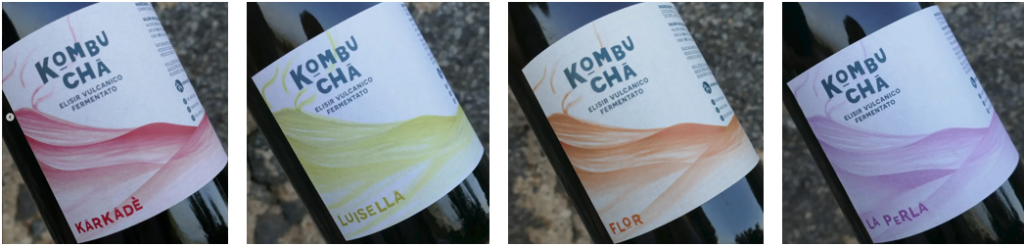
Karkade: We blend Indian Assam Satrupa black tea with a black tea from Malawi. The Satrupa provides more body, while the Malawi tea—more delicate than typical black teas—creates the perfect balance for this kombucha. For flavoring, we use hibiscus flowers, which impart an intense color and add a fresh, tart note.
Luisella: This kombucha is crafted with Earl Grey tea—one of the world’s most famous teas and a perennial favorite for afternoon tea. It blends Chinese and Indian black teas, infused with oil extracted from bergamot peel. We further enhance the flavor profile by adding lemon verbena, which boosts both its freshness and aromatic quality.
La Flor: This blend is crafted from a mix of Assam black tea and Sencha green tea. The latter offers a harmonious profile—balancing astringency with sweetness—and leaves behind a refreshing aftertaste and a truly distinctive, delicate sweetness. For flavoring, we incorporate peony petals, blueberries, mango, and dried papaya, which lend the drink a fruity, exotic character.
La Perla: Crafted from a delightful white tea sourced from the Satemwa plantations in Malawi, this tea undergoes a light oxidation process, resulting in a delicate yet more complex flavor profile. We infuse it with Sicilian lavender and sweet pea blossoms, which impart a violet hue and evoke the scents of the Mediterranean scrub.
Beyond their “core” lines, they produce seasonal editions, wild fermentations, limited batches, and collaborations with local artisans.
Flavors: P-Etna-tea
Both kombucha and P-Etna Tea are fermented, tea-based drinks, but kombucha is a classic fermentation made with sugar and a SCOBY, while P-Etna Tea is their own creation, inspired by the local landscape. It is fermented using a kombucha starter culture but incorporates spontaneous infusions and ingredients that tell the story of Mount Etna—as well as the regions from which they source single-varietal teas. Kombucha is more stable and familiar, while P-Etna is wilder, more unpredictable, and better suited for culinary pairings.
The P-etna-tea offerings are constantly evolving; they are seasonal and focused on expressing the character of the land that hosts us. They rank among the very best in their selection.
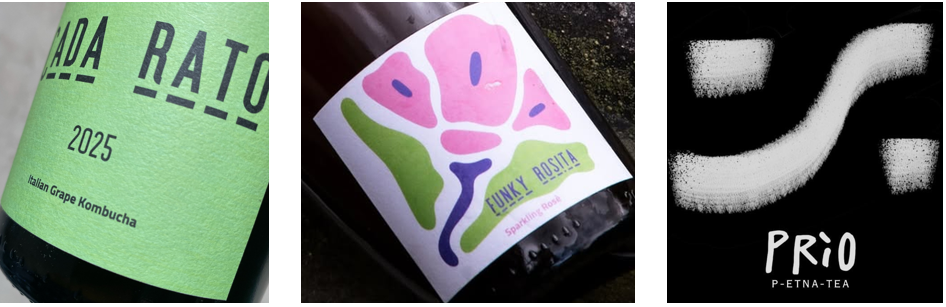
Cada Rato: An Italian grape kombucha crafted by infusing spent Catarratto grapes—left over from direct pressing—into a base of Malawi-grown, Pu’er-style tea and geranium leaves. The result is a vibrant, living beverage that blends the Catarratto grapes’ elegant acidity with the Pu’er tea’s earthy depth and the geranium’s floral freshness.
Funky Rosita: A tea-free Pet-nat, crafted via a kombucha-style fermentation of an infusion of Rosa gallica and Hibiscus rosa. It is funky, wild, and floral—yet also intriguing, ever-changing, and fun. The sharp, vibrant notes of Hibiscus rosa from Malawi are softened by the delicate character of roses grown by the Dàmos farm. This non-alcoholic Pet-nat brings together three entities that share a common vision and goals.
Prio: A P-Etna-tea with an essential, unflavored style, crafted to highlight the purity and refinement of the tea used. The foundation of this fermentation is Ogasa—a prized variety of Japanese Sencha grown in full sun—which lends the beverage a delicate yet distinctive profile. In appearance, it is a clear, pale straw-yellow, while on the nose, it releases rich, complex herbaceous notes characteristic of the finest spring harvests. The taste is fresh, balanced, and subtle, with a light, natural acidity from fermentation that doesn’t overpower the tea’s inherent character, but complements it.
Premium kombucha
For Marco and Leonor, the opportunity ahead lies in changing how people think about kombucha.
We believe the future of premium kombucha in Italy—and especially abroad—is very promising. The market is maturing, and as the category grows, demand is also increasing for more authentic products, rooted in their place of origin, and complex. For us, kombucha should not simply be a non-alcoholic alternative to a conventional soft drink. It can become a genuine gastronomic product, with its own identity, aromatic complexity, and food-pairing potential, much like what we seek in wine. This is where we differ from more “standard” kombucha: an audience is willing to learn about the raw ingredients, the type of tea used, the fermentation, seasonality, and ingredient origins. These consumers aren’t necessarily looking for a sweet, flavored drink, but for something drier, more developed, and more interesting from a gastronomic perspective.
This audience is growing particularly in quality dining, among chefs, sommeliers, and restaurateurs who want to offer their customers a complete experience without alcohol. We also see interest among consumers who have chosen to reduce their alcohol consumption without giving up the pleasure of drinking something complex at an aperitif or with a meal. For example, this includes people who choose fine dining and want a different beverage to accompany each course; people who go to cocktail bars and seek non-alcoholic alternatives to traditional mixology; and people who are simply adopting a more mindful approach to alcohol consumption. This trend seems even more evident abroad, where no- and low-alcohol culture is well developed, and there is consequently greater openness to fermented, gastronomic, and artisanal beverages. For Selvatica Lab, then, the future is not simply about selling more kombucha. It is about changing how people perceive kombucha: moving it from a functional drink or a soft-drink alternative to an artisanal, locally rooted gastronomic product that can engage with the worlds of wine and restaurants.
Future plans
Looking ahead, one of our main goals is to make Selvatica Lab an increasingly sustainable project—not only environmentally, but also socially and in its relationship with the local area. We want our business to become more involved in and integrated with the community, including by creating and supporting social projects and initiatives that create value for local people. The idea behind Selvatica Lab is to continue producing complex, fun, and accessible beverages that spark curiosity and engage different kinds of people, without ever compromising on quality.
We want to preserve the distinctive artisanal character of our work, grounded in research, experimentation, careful ingredient selection, and attention at every stage of production. At the same time, we want Selvatica Lab to become an increasingly important local point of reference—not just as a producer of fermented beverages, but as a place to meet, learn, and share. Our long-term ambition is to build an experiential tourism offering around Selvatica Lab, centered on fermentation, artisanal production, and the local area: a way for people to discover not only our products, but also our philosophy, our work, and the place where it all comes to life.
Editor’s note: This feature is based on written responses supplied by Selvatica Lab. Product descriptions and marketing details were sourced from the company’s website.
Leggi la versione italiana della risposta di Marco e Lenor alle domande che ho posto: Selvatica Lab Risposte.